A few days ago, I wrote about how powerful AI has become. Not powerful in the Silicon Valley press-release sense, but genuinely, structurally powerful in ways that most people are still underestimating.
The capability is real. The acceleration is real. The implications for how work gets done, how industries organise themselves, how value gets created, all of it is already in motion.
I meant that piece as a signal to pay attention. And this piece is about what you should be paying attention to.
Because a scenario is quietly forming alongside all that capability, and it does not come from AI being bad at its job. It comes from AI being extraordinarily good at it, inside an economic system nobody has redesigned to account for that goodness.
Citrini Research amplified it. Their viral 2026 piece gave it a name, a mechanism, and a number and put it in front of the people who needed to hear it most.
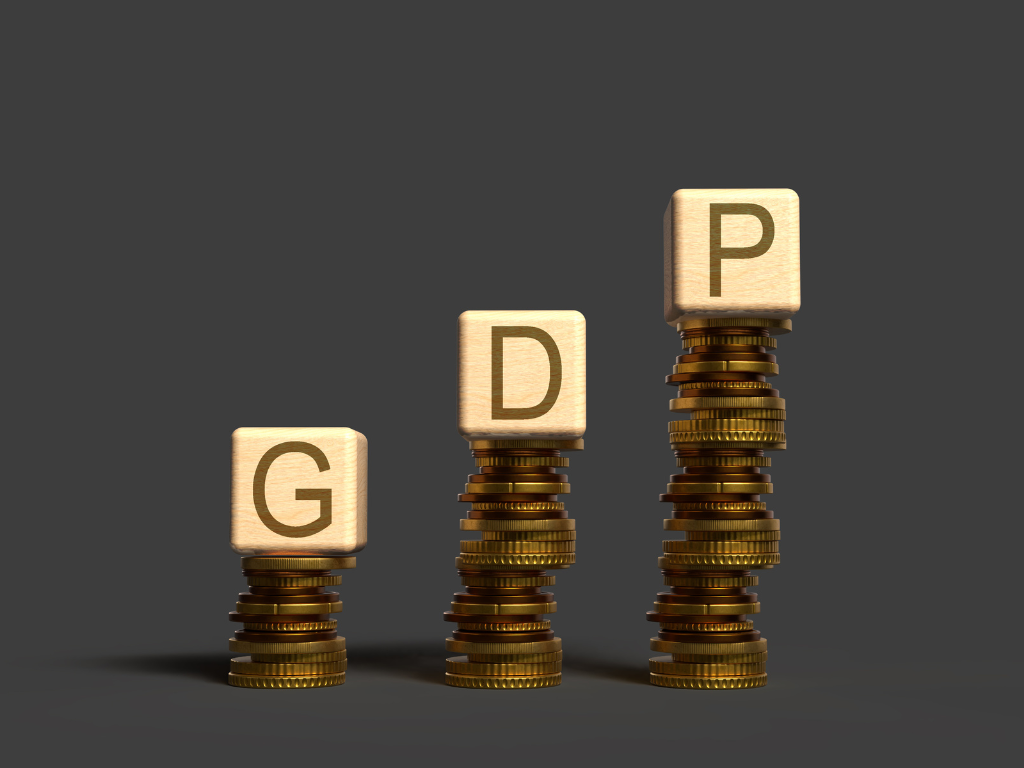
They called it Ghost GDP.
What Ghost GDP Actually Means
Let me explain Ghost GDP with an analogy a high schooler could follow.
Imagine your school replaces the canteen staff with a single giant vending machine.
The machine is extraordinary: it serves 500 students a day, never calls in sick, never asks for a pay rise, and runs on a fraction of what the canteen workers used to cost. From the school’s perspective, productivity has exploded. Output per dollar spent has never been higher.
But here is what the school’s financial report will not show you.
The five canteen workers who lost their jobs no longer buy lunch at the local cafe. They stop visiting the weekend markets. They cancel their streaming subscriptions. The local economy, quietly and without fanfare, contracts a little. The machine generates output. The machine spends nothing.
Now scale that up to an entire country. That is Ghost GDP.
Economic output that appears in the national accounts gets celebrated in earnings calls and productivity reports, but never actually circulates through the hands of ordinary people.
It is growth that ghosts the real economy. Present on paper. Absent from the checkout.
The 2026 Economy is Already Showing the Symptoms
Photo by Possessed Photography on Unsplash
Citrini wrote their piece as a memo from 2028, looking back at how the crisis unfolded. But the conditions they described are not waiting for 2028 to arrive.
Their scenario modelled what happens when AI agents replace roughly 70% of white-collar “inefficiencies” across the US economy.
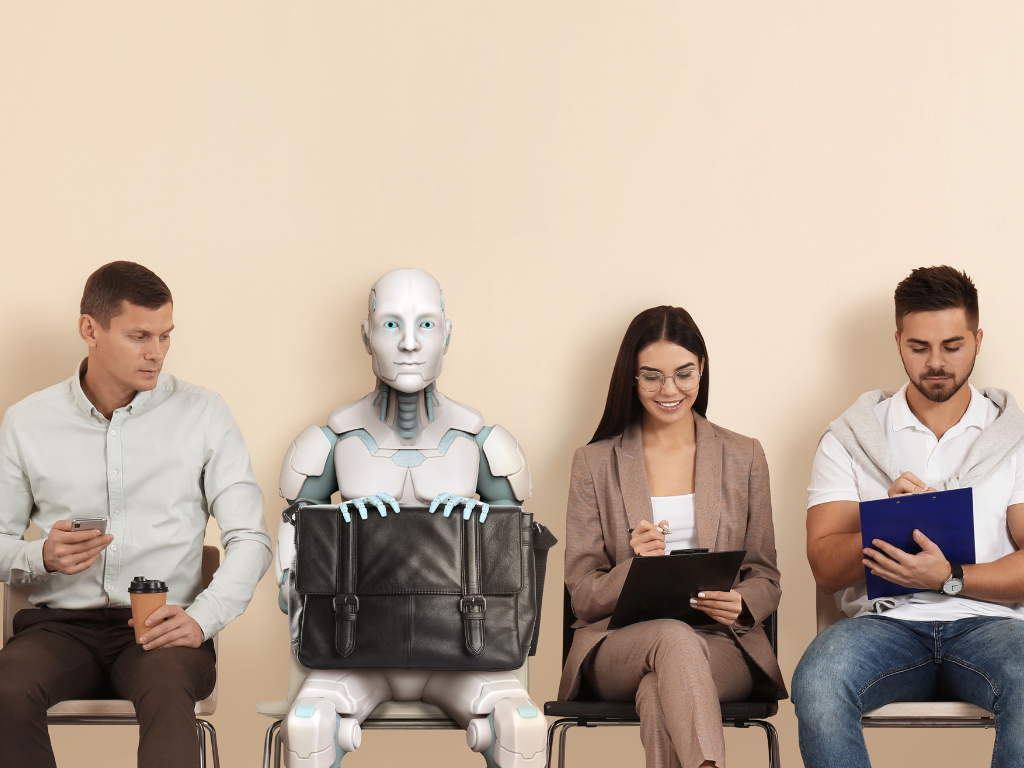
Lawyers, financial analysts, accountants, marketing professionals, junior developers: not just assisted by AI, but replaced by it.
White-collar employment, the sector that underpinned a generation of mortgage approvals and consumer confidence, starts to hollow out.
From there, the cascade runs predictably. Reduced income leads to reduced consumer spending.
Consumer spending reductions translate into private credit stress. Private credit stress radiates into mortgage markets. The $13 trillion US mortgage market begins to fracture because it was written against income levels that AI displacement has structurally impaired.
Meanwhile, stock markets, which had been rising on the back of AI-driven corporate profit gains, suddenly have to reprice for a consumption collapse.
Citrini modelled the S&P 500 falling 38% from its October 2026 highs. Unemployment reaching 10.2%.
Not because AI failed. Because it succeeded, in a system nobody redesigned to handle that success.
Agentic AI Makes This Urgent, Not Theoretical
Photo by Israel Andrade on Unsplash
Now, let’s sit and talk about Agentic AI that’s zipping along faster than a jet.
Agentic AI does not just assist. It executes. It researches, drafts, formats, files, routes, and decides, across multi-step workflows, without a human touching each step.
Legal departments, finance functions, content teams, and software organisations are deploying it right now, not in pilots, but in production.
The work that used to require three or four junior professionals now requires an AI agent and one person to supervise it. That supervision role is itself under pressure as models get more reliable.
This is the structural setup that Citrini’s Ghost GDP scenario requires. Not a distant AI takeover.
Just a steady, quarterly replacement of billable human hours with agent hours, compounded across industries, compounded over time, until the river of economic circulation runs slower and slower.
What makes agentic AI different from previous automation waves is the breadth. Factory automation displaced blue-collar workers. Agentic AI targets exactly the white-collar professionals who were supposed to be safe: educated, credentialed, employed in the information economy.
The mortgage-paying, locally-spending, SaaS-subscribing workforce that holds consumer economies together.
Keeping Humans in The Loop
Here is what I want to say directly:
The most important conversation in AI right now is not about capability. It is about deployment structure.
We have been so focused on what AI can do that we have barely started asking how it should be integrated into systems that still require human economic participation to function.
Keeping humans in the loop is not a safety slogan. It is not a regulatory box to tick. In the context of Ghost GDP, it is a structural intervention in the economy itself.
When humans remain part of the production process, they receive income. When they receive income, they spend it. Spending powers the small businesses, the services sector, the housing market, the tax base, the entire downstream of a functioning society.
Remove the human from the loop, and you do not just lose a job. You lose a node in a circulation network that has been running since the first marketplace.
Fortune’s coverage of Citrini’s work raised the same question that their own research posed: what actually prevents the Ghost GDP scenario from becoming real?
The answer is not AI regulation. It is not a moratorium on automation. It is deliberate design choices, made by organisations and policymakers, about what role humans should continue to play.
AI that augments human workers distributes productivity gains. AI that eliminates human workers concentrates them.
The difference between those two paths is a choice, and in many organisations, that choice is being made this quarter, in workforce planning meetings, without anyone framing it in those terms.
What This Requires of Us
Photo by Nahrizul Kadri on Unsplash
Citrini Research was careful to say their piece was a scenario, not a prediction. They were not writing AI doom fiction. They were mapping a credible risk that deserved serious modelling.
That framing matters. The Ghost GDP outcome is not inevitable. But it requires active work to avoid. And that work starts with honesty about where we currently are.
We have built AI systems of extraordinary power. As I argued in my previous piece, that power is real and it is accelerating.
But power without considered deployment is not progress. It is just a faster way to arrive at unintended consequences.
The concrete steps matter here.
Organisations can design AI deployment with deliberate human roles: not token oversight, but genuine participation at the points where judgement, context, and accountability are highest value.
Policymakers can ask whether economic indicators are measuring circulation, not just output.
Researchers and executives can pressure-test automation decisions against the question: does this preserve the economic loop, or does it extract value from it?
Citrini named the ghost. That is the first step.
Now the people building and deploying AI need to decide whether they are going to keep haunting the economy, or design something that actually lives in it.
“THE 2028 GLOBAL INTELLIGENCE CRISIS: A Thought Exercise in Financial History, from the Future” was published on 22 February 2026 by Citrini Research, co-authored by Citrini and Alap Shah. Available atcitriniresearch.com.
Highly recommended reading for anyone thinking seriously about AI and economic risk.