
The Most Dangerous Word in Any Multilingual Meeting
It’s “yes” from someone who didn’t follow.

There is a moment most multilingual professionals know intimately.
You are sitting in a meeting room, the conversation is moving fast, and somewhere between the third and fourth exchange, you realise the other person has stopped truly listening. Not because they are disinterested. Because they are lost.
They nod. They smile. They reach for their coffee at precisely the wrong moment, hoping the gesture reads as thoughtful rather than confused. And the meeting moves on, carrying its misunderstandings quietly into whatever decision gets made at the end.
Language barriers in face-to-face settings are not a niche problem. They are one of the most universal, most quietly consequential communication failures in modern professional and community life. And for decades, the solutions have been either expensive, impractical, or simply not good enough.
That is changing. Faster than most people realise.
Why In-Person Is the Hardest Problem to Solve
It is worth pausing on why in-person translation is so much harder than its digital counterpart.
When you are communicating online, you have affordances.
A chat window. A caption toggle. A quick copy-paste into a translate tab. There is time, however brief, to compensate. The asynchronous nature of digital communication creates natural buffer zones where gaps in comprehension can be quietly filled.
In a room, there is no buffer. There is just the conversation, moving forward at the pace of whoever is speaking.
You cannot pause a live discussion to check what someone meant. You cannot rewind a parent-teacher interview to re-examine the sentence where you lost the thread. When a doctor is explaining a treatment plan and the patient nods without truly understanding, nobody in that room is made aware that comprehension failed. The moment just passes.
Of the 7.8 billion people on the planet, only around 1.35 billion speak English, and the majority of those are not native speakers. Every day, in clinics, classrooms, council meetings, business negotiations, and community gatherings, people sit across from one another with important things to say and inadequate tools to say them.
The consequence is rarely dramatic. It is usually quiet. A missed nuance. A polite nod that masks confusion. A decision made on incomplete information. A relationship that never quite formed.
The Human Interpreter Paradox

Professional human interpreters remain the gold standard for high-stakes multilingual communication.
In a courtroom, a complex medical consultation, or a diplomatic negotiation, an experienced interpreter is irreplaceable. They carry not just language but cultural context, emotional register, and the judgement to know when something requires more than a direct translation.
Nobody serious is arguing otherwise.
But the reality of daily multilingual life does not look like a United Nations chamber.
It looks like a small business owner trying to close a deal with an overseas client who flew in unexpectedly. It looks like a community health worker trying to explain vaccination information to a newly arrived family. It looks like a school counsellor trying to have a meaningful conversation with a parent whose English extends only as far as pleasantries.
In these moments, booking a credentialed interpreter is not always feasible, financially or logistically. Interpreters cost money. They require advance notice. They need to physically travel to a location, or at minimum be available at the right time. For spontaneous, everyday, or lower-budget interactions, the interpreter model simply does not scale.
This is the gap that AI-powered translation tools are now stepping into. Not to replace human interpreters in the settings where they are essential, but to serve the vast, underserved middle ground where the alternative to an AI tool is not a human interpreter. It is no support at all.
What Has Actually Changed
For a long time, AI translation tools were impressive in controlled environments and frustrating everywhere else.
They stumbled on accents. They flattened idiom. They introduced a mechanical, halting quality to speech that made conversations feel like they were being filtered through a badly subtitled film.
The shift in the past two years has been substantial. Modern AI translation for in-person meetings now operates in a way that would have felt genuinely futuristic not long ago.
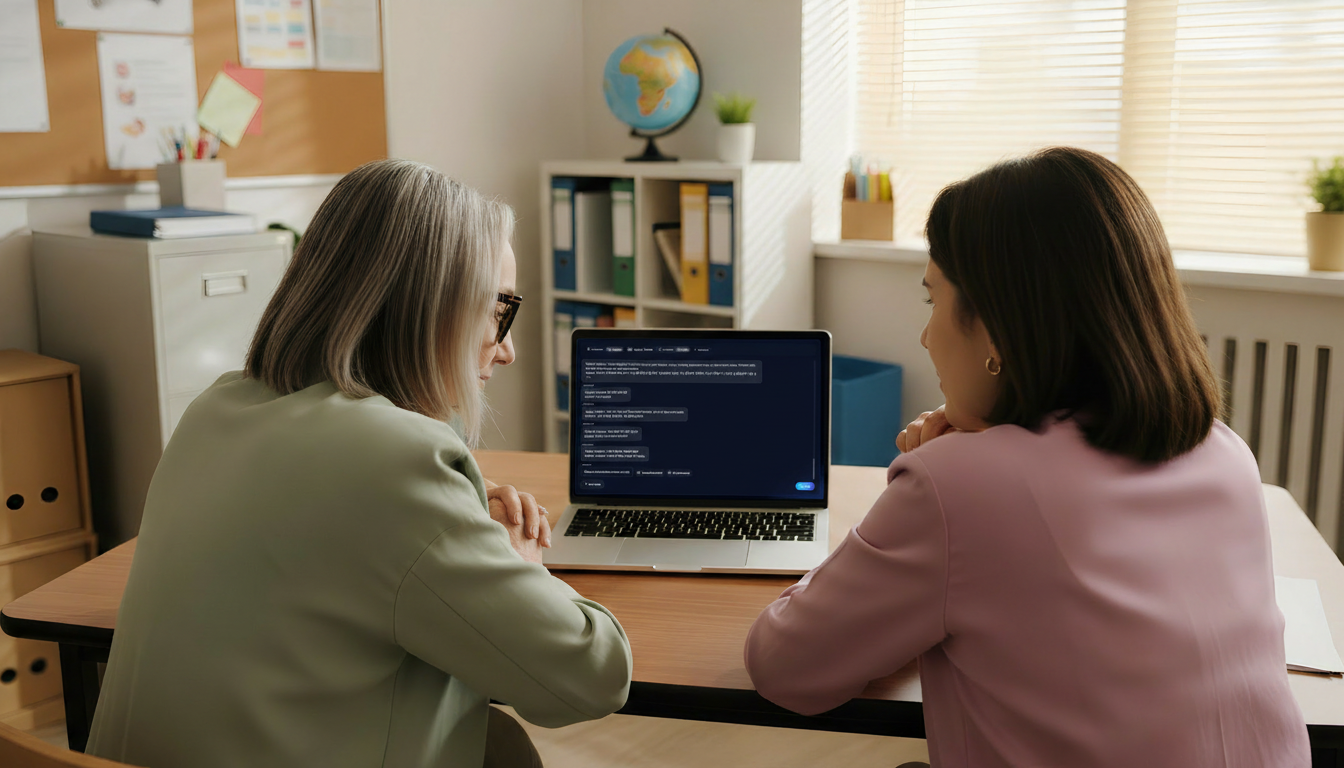
Here is what the workflow actually looks like with a tool like VideoTranslatorAI.
First, Speech is captured in real time through a microphone as the conversation unfolds. That audio is transcribed almost instantly into text.
Second, the text is translated into the target language and played back as natural-sounding synthesised speech.
The experience resembles a consecutive interpreter: one person speaks a complete thought, the translation follows, and the other person responds. It creates a rhythm that both parties can follow, with enough space to hear, process, and reply without the conversation collapsing into a rushed mess.
Critically, what VideoTranslatorAI now offers goes beyond translation alone.
The service combines real-time meeting transcription, live interpretation across multiple languages, and automatic meeting summaries into a single workflow.
This means that after the conversation ends, you are not left reconstructing what was agreed or trying to remember which commitment was made in which language.
You have a record. A clear, structured summary of what happened, who said what, and what was decided.
For anyone who has ever left a multilingual meeting uncertain about what was actually understood and agreed, this is not a small thing.

The Moments Where This Actually Matters
Consider what changes in a few common scenarios.
A general practitioner in a busy urban clinic sees a patient who recently arrived from Vietnam and speaks very limited English.
In the past, that consultation relied on a family member translating, which creates its own problems around accuracy, privacy, and emotional dynamics.
Now, the doctor opens VideoTranslatorAI on a tablet, the conversation proceeds in both languages simultaneously, and at the end, both the patient and the clinic have a summarised record of what was discussed and what was agreed for follow-up care.
A small business owner in Melbourne is hosting a group of potential investors from Japan. The conversation is exploratory, informal, and fast-moving.
Booking a professional interpreter for an initial relationship-building meeting felt like overkill, and the cost was hard to justify before any deal was on the table.
With an AI-powered tool handling the interpretation in real time and summarising the key points afterwards, the meeting happens, the relationship begins, and no one leaves the room with a different understanding of what was discussed.
A community centre in Western Sydney runs weekly drop-in sessions for newly arrived migrants navigating bureaucratic processes. The volunteer running the sessions speaks English and some Mandarin.
The mix of languages walking through the door on any given afternoon is far broader than that. Having a tool that can handle live interpretation across dozens of languages, without pre-booking and without cost-per-session fees, changes what is actually possible.
These are not edge cases. They are the texture of daily multilingual life in a globalised world.
The Honest Limits
It would be dishonest to suggest AI translation tools have solved every problem in this space. They have not.
Highly technical or legally consequential communication still benefits enormously from a trained human interpreter.
Cultural nuance, particularly in contexts where the stakes of a mistranslation are serious, remains an area where AI tools require careful supervision. Accents, dialects, and domain-specific vocabulary can still introduce friction, though the gap between AI and human performance continues to narrow at a pace that is genuinely surprising.
The appropriate framing is not AI versus human interpreters. It is about matching the right tool to the right context.
Human interpreters for high-stakes, complex, or deeply nuanced exchanges where accuracy is critical and budget allows. AI-powered tools for the everyday, spontaneous, or budget-constrained situations that currently go underserved.
The goal is that fewer people leave important conversations having understood less than they needed to.
A Different Kind of Inclusion
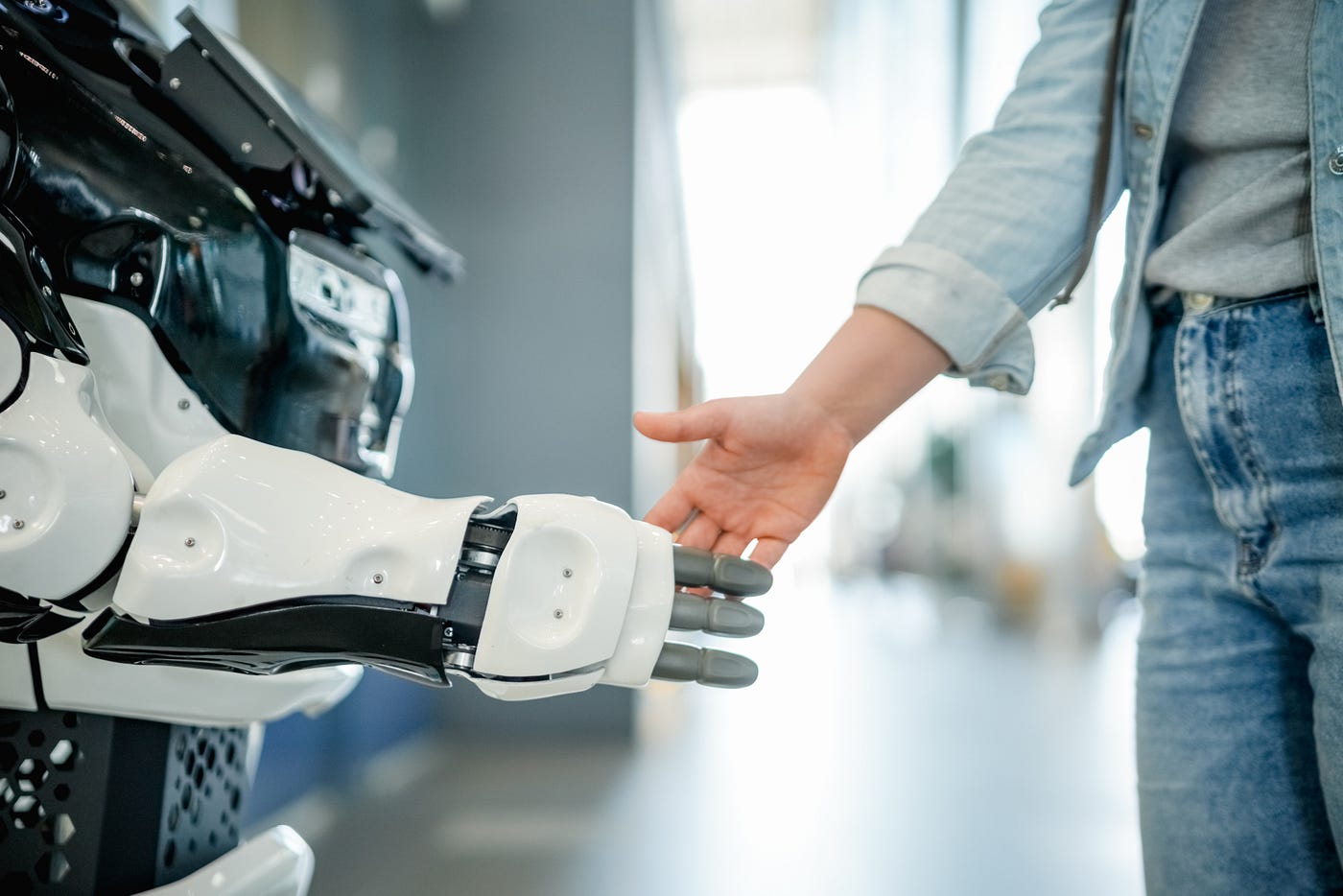
There is a tendency to discuss translation technology primarily as a productivity tool. Faster meetings, smoother deals, better business outcomes. All of that is real.
But the more important story is about inclusion.
Language is not just a communication method. It is tied up in dignity, in confidence, in the ability to participate fully in the institutions and decisions that affect your life.
When a person cannot express themselves clearly in an important meeting, it is not just an inconvenience. It is a form of exclusion that compounds over time, across healthcare appointments, school interactions, legal processes, and professional opportunities.
AI-powered in-person translation, done well, does not just make meetings more efficient. It returns the ability to participate to people who have been quietly sitting on the margins of conversations that matter to them.
That is a different kind of value. And it is worth taking seriously.
What Comes Next
The trajectory here is clear. AI translation tools will continue to improve in accuracy, naturalness, and range.
The latency between speech and translation will continue to shrink. The range of supported languages and dialects will continue to expand. The integration with meeting workflows, from transcription to summary to follow-up action items, will become more seamless.
We are still early. But we are past the point where this technology is a novelty or a workaround. For a growing number of professionals, community workers, educators, and healthcare providers, AI-powered in-person translation has moved from a nice-to-have into an operational essential.
The room that almost lost the deal, or the diagnosis, or the relationship, does not have to be that room anymore.
Language should not be the reason someone leaves a conversation having understood less than they needed to. We now have tools that can do something meaningful about that. The question is simply whether we use them.