
Bespoke Software is Back in Vogue
AI just changed the maths. Here’s what that means.

There’s a phrase that quietly runs most business software decisions: “good enough.”
It’s how companies ended up on WordPress, Shopify, or whichever open-source CMS more or less solved the problem.
It’s why internal tools are a patchwork of Notion, Airtable, and three integrations held together by an optimistic Zapier workflow.
“Good enough” made sense for a long time. Bespoke software was expensive. It required big teams, long timelines, and a budget that only enterprise companies could justify without flinching. So small and mid-market businesses made do. They bent their processes to fit their tools.
That era is ending. Bespoke software is back, and AI is the reason.
The Pendulum, and Why It Swung
Cast your mind back to the late 90s and early 2000s. Digital agencies were building bespoke content management systems for businesses of all sizes.
Every client got something crafted from scratch, tailored to exactly what they needed. It was expensive, sometimes messy, and occasionally out of date the moment it shipped, but it was theirs.
Then the economics shifted. Open-source platforms matured. WordPress became the default answer to almost any web problem.
Tools like Drupal, Joomla, and later Shopify, Webflow, and dozens of SaaS alternatives made standardised software the sensible choice. It had security updates, active communities, and enterprise tiers if you needed to scale.
Migrating to these platforms was smart. For most businesses, it was the right call.
Standardised software is built for the widest possible audience. By design, it’s a compromise. And the compromise starts showing itself the moment your needs drift even slightly outside the mainstream.
You want to restructure how SEO metadata is managed across your pages? File a request and hope it makes the roadmap. You want your blog, email sends, and contact management in a single admin panel that actually reflects your workflow? Good luck finding that out of the box. You need structured data configured exactly the way Google expects for your specific content type? You’re probably doing it manually, in multiple places, with no single source of truth.
That’s the ceiling of “good enough.” And AI has just given us a way past it.
Why Bespoke is Suddenly Affordable
Building custom software used to come down to one constraint: time. Developers are expensive. Good developers are very expensive. A small team building a bespoke CMS or internal tool represented months of salary, testing, iteration, and maintenance. Most businesses simply couldn’t justify it.
AI has collapsed that constraint.
Done correctly, AI-assisted development doesn’t just speed things up. It applies best practices systematically, because it’s trained on them.
You’re not trading quality for speed. You’re getting both. What once required a team of five over six months can now be built by one person with the right process in a fraction of the time.
The gap between “bespoke” and “affordable” has essentially closed. And once that gap closes, the whole calculus of software procurement changes.
Our Own Path Through the Platforms
At Elephant Stripes, we didn’t arrive at this conclusion theoretically. We went through it.
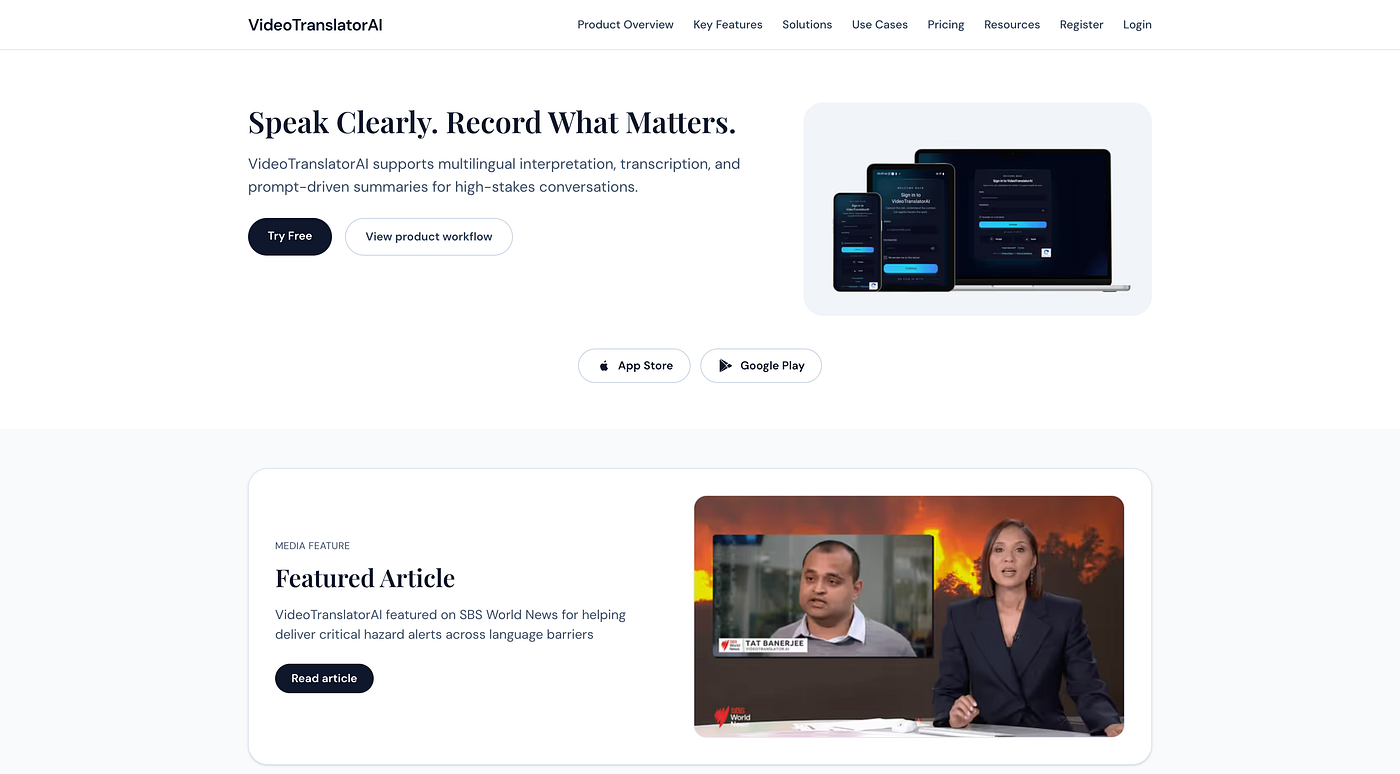
VideoTranslator, our core product, has had a few homes over the years. It started on Hugo: a static site generator that was genuinely fast and easy to work with. Blog posts were markdown files, GitHub Actions handled deployments, and there was no backend to speak of. Lean, performant, and exactly right for where the business was at the time.
As the product grew, so did the requirements. We moved to a frontend framework with Forestry as the CMS. Forestry was decent, but it had limits we kept running into, and the frontend wasn’t something we were proud of.
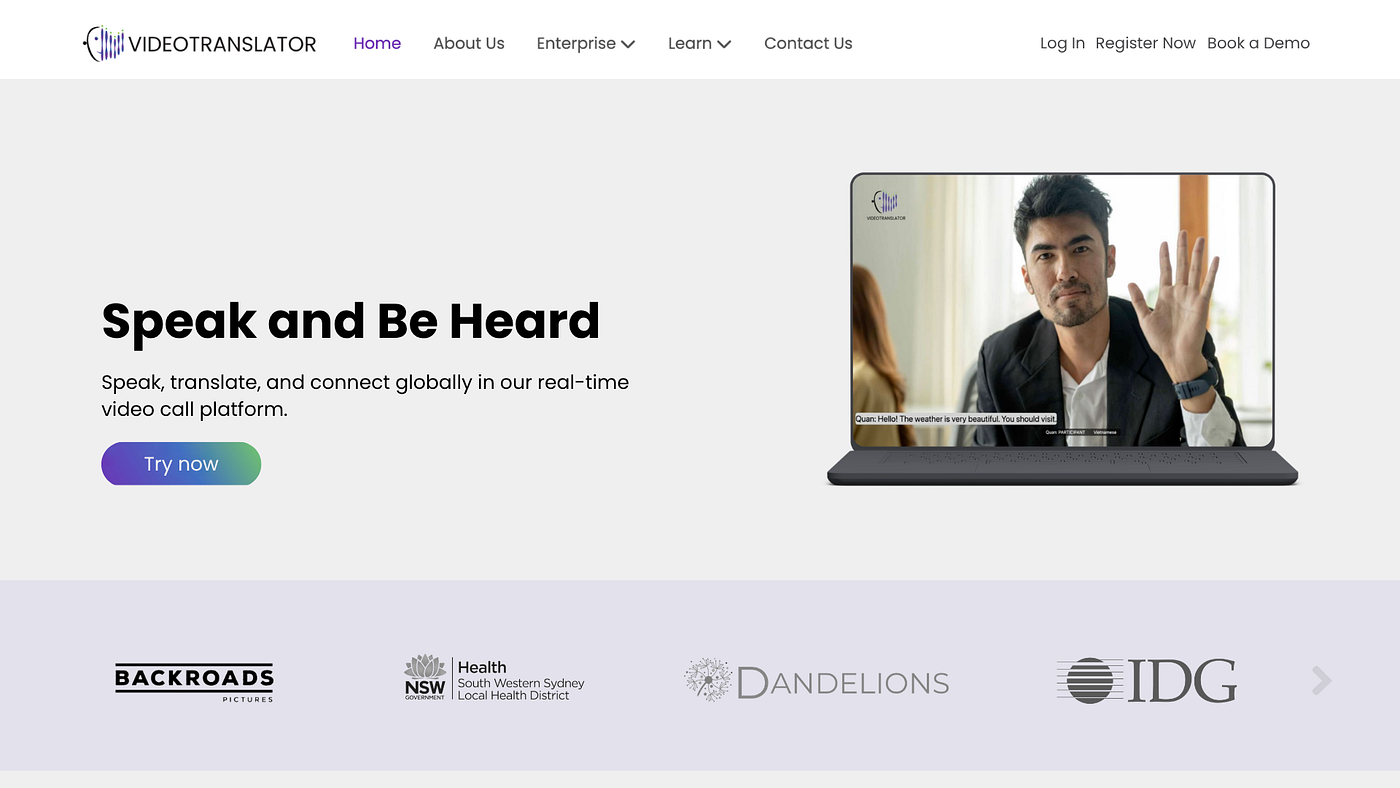
Then came a rebrand. We moved to Gatsby on the frontend with Strapi as the backend. Strapi is genuinely good software. Gatsby, another static site generator like Hugo, had real promise as a concept, but the project eventually stalled. Community support faded. It just didn’t age well.
Each of these platforms worked, in the way that “good enough” works. None of them was exactly what we needed. We were always working around something.
Building the CMS We actually wanted
Early this year, my team and I started spending a lot of time with what people are calling vibe coding: using AI to build software quickly, iteratively, with a rough idea rather than a full spec. It was genuinely fun, and it was fast.
And at some point, it occurred to me that instead of adopting yet another platform, we could just build the CMS we’d always wanted.
What did that look like?
We wanted all our SEO in one place. Not scattered across plugins, settings panels, and meta boxes, living in three different corners of an admin interface.
We wanted to sit on a single page and see the page title, meta description, Twitter card image, and JSON-LD structured data all together.
Press enter or click to view image in full size

JSON-LD is the structured data format that tells Google explicitly what your content is about. It’s what powers those rich snippets in search results: the business name, hours, reviews, and product details laid out clearly beneath the main link.
In a generic CMS, getting JSON-LD right is fiddly. It involves plugins, workarounds, and guessing whether something fell back to a default.
In a bespoke CMS built for our specific needs, every single page has an SEO section. Right there, next to the content. Set it, confirm it, done.
We also wanted our blog system to handle email sends. We wanted project pages, recognition sections, and contact management in the same admin interface, so our team didn’t have to context-switch between platforms.
We wanted the whole thing to reflect how our business actually works, not how an open-source contributor imagined a generic user might manage content.
Building this even five years ago would have been a significant investment. This year, it took weeks.
What The Improvement Process Looks Like
Bespoke software gives you something else that off-the-shelf platforms can’t: genuine ownership of the improvement loop.
When I identified recently that our CMS needed better SEO hygiene across pages, I didn’t file a feature request and wait.
I ran an audit of the current site state, cataloguing what was missing, what was inconsistent, and what was falling back on defaults that weren’t quite right.
With that audit, I created a deep-dive analysis to validate the gaps in detail. From there, an implementation plan with clear phases: what to fix, in what order, with what expected outcomes.
After that, I set an AI agent to work executing the plan. It ran for about 28 minutes, worked through each phase, wrote a changelog for each one, and handled the database migrations I’d flagged. I tested the output, and I’m confident to say that it looked good.
The whole cycle, from spotting the problem to reviewing the result, happened in a single working session.
Compare that to the experience of trying to get a similar fix done inside an off-the-shelf platform: filing support tickets, waiting on plugin updates, hoping a third-party integration doesn’t break when the platform updates underneath it.
The bespoke path is faster, more predictable, and leaves zero mystery about what changed and why.
Watch how I optimise website SEO with Codex:
The Benefit Nobody Mentions
Something that surprised me when I went through this process, and I think it’s genuinely underrated.
Building bespoke software forces clarity about what you actually need.
When you can’t point at a feature on a pricing page and say “that one,” you have to define it yourself. You have to think about what the tool should do, how your team will use it, what the edge cases are. That process of definition is uncomfortable at first. But it produces real understanding of your own business.
People often come out of a bespoke build with sharper workflows, cleaner thinking about their product, and a much better handle on what matters versus what they thought mattered.
The software becomes a side effect of getting clear.
Is Bespoke Right for Everyone?
My honest answer to this question is: No. Not automatically.
If your requirements genuinely match a standard product, or if your team needs something deployed tomorrow with no time to build, off-the-shelf can still be the right call.
But if you’ve ever found yourself fighting your tools, building workarounds, or paying for features you’ll never use while missing the one feature you actually need, bespoke is worth taking seriously.
The cost is lower than you assume. The timeline is shorter than it used to be. And the outcome: software that fits your business rather than asking your business to fit the software, is genuinely hard to replicate.
At Elephant Stripes, this is what we do. We build software that reflects how your business actually works. Whether that’s a custom CMS, an internal tool, or a full application with its own admin system, we build it to fit exactly, not approximately. If that sounds like something worth a conversation, drop us a message here.
Bespoke software is back. And this time, the economics are on its side.
If you’re looking to rebuild your product or workflows for the AI era, feel free to contact ElephantStripes. We combine AI-driven speed with human judgment to build software that actually fits.
Subscribe to our YouTube channel for daily AI tips: https://www.youtube.com/@elephantstripesai