
The Last Chapter of Our NSW SBIR Journey
From the 2022 NSW SBIR brief to a production-ready platform.

Three years ago, South Western Sydney Local Health District (SWSLHD) issued a challenge that quietly captured something important about the gap between what Australia's healthcare system promises and what many patients actually experience.
For the 40% of SWSLHD's community who speak a language other than English at home, accessing equitable, safe health care too often depends on the availability of a professional interpreter. When one is not available, the consultation proceeds anyway. Information gets lost. Patients leave without fully understanding their condition or their care plan. Clinical staff do the best they can.
The 2022 NSW Small Business Innovation and Research Program CALD Services Challenge asked: could AI change this?
Today, we are proud to say that it can, and that MediCALD is the result.
Thank You
None of this would exist without the commitment of the clinical and program teams who worked alongside us from the beginning.
From SWSLHD, our clinical stakeholders Josephine Chow, Safa El-Dadoun, Aleisha Heys, and Sam Shen brought rigorous, patient-centred thinking to every stage of the program. Their willingness to challenge our assumptions and redirect our focus when the evidence pointed elsewhere is the reason MediCALD became something genuinely useful rather than merely technically interesting.
From the Office of the Chief Scientist and Engineer (OCSE), Aashna Rampal, Lewis Bennet, and Carlos Carbonato-Bowket provided outstanding program support across all three phases. Their guidance kept the project anchored to the objectives of the SBIR program while giving us the space to build and iterate properly.
We are grateful to all of you.
How We Got Here
Version 1: Video Translation Application (2023)
The Feasibility Study delivered what the original challenge brief described: a platform that allowed health communications staff to upload existing video content, transcribe it, translate it into multiple CALD languages, and apply AI-generated voiceovers. The medical terminology management tools worked well. The technology was sound.
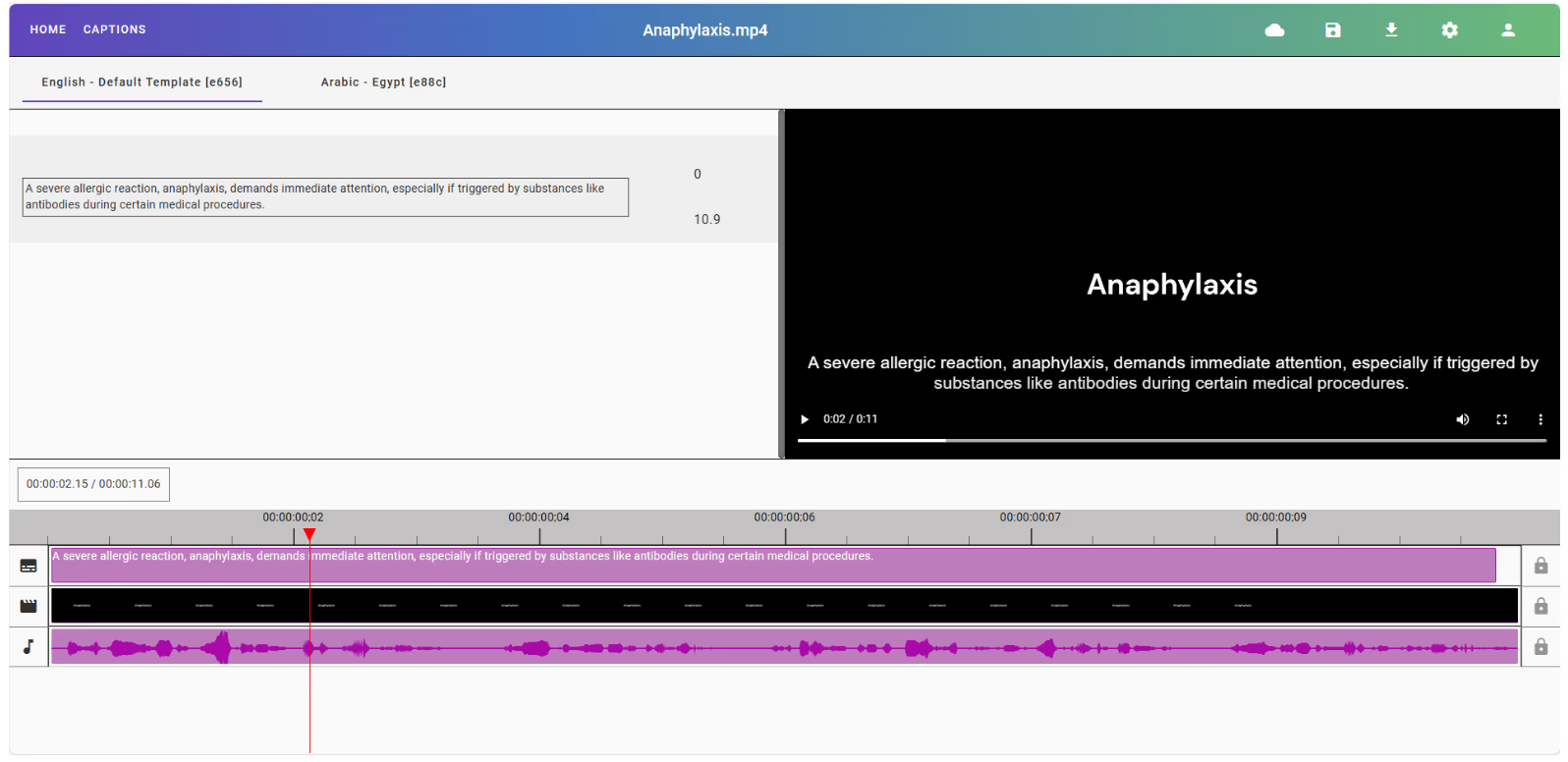
But early conversations with clinical staff at SWSLHD surfaced something more urgent. The gap they were experiencing every day was not in translated video content. It was in the consultation room itself, where a midwife, nurse, or community health worker needed to communicate with a patient who did not speak English, right now, without a professional interpreter available.
That insight changed everything.
Version 2: Telehealth Application (2024 to 2025)
The Proof of Concept set the video translation application aside entirely and rebuilt around the real clinical need: live, two-way interpretation during consultations. Version 2 introduced a telehealth application providing real-time AI-assisted communication between a clinician and a CALD patient, with both video call and in-person consultation modes, AI transcription and translation in the chat interface, multilingual voiceover output, broadcast capability for group health sessions, and an interpreter call-in feature.
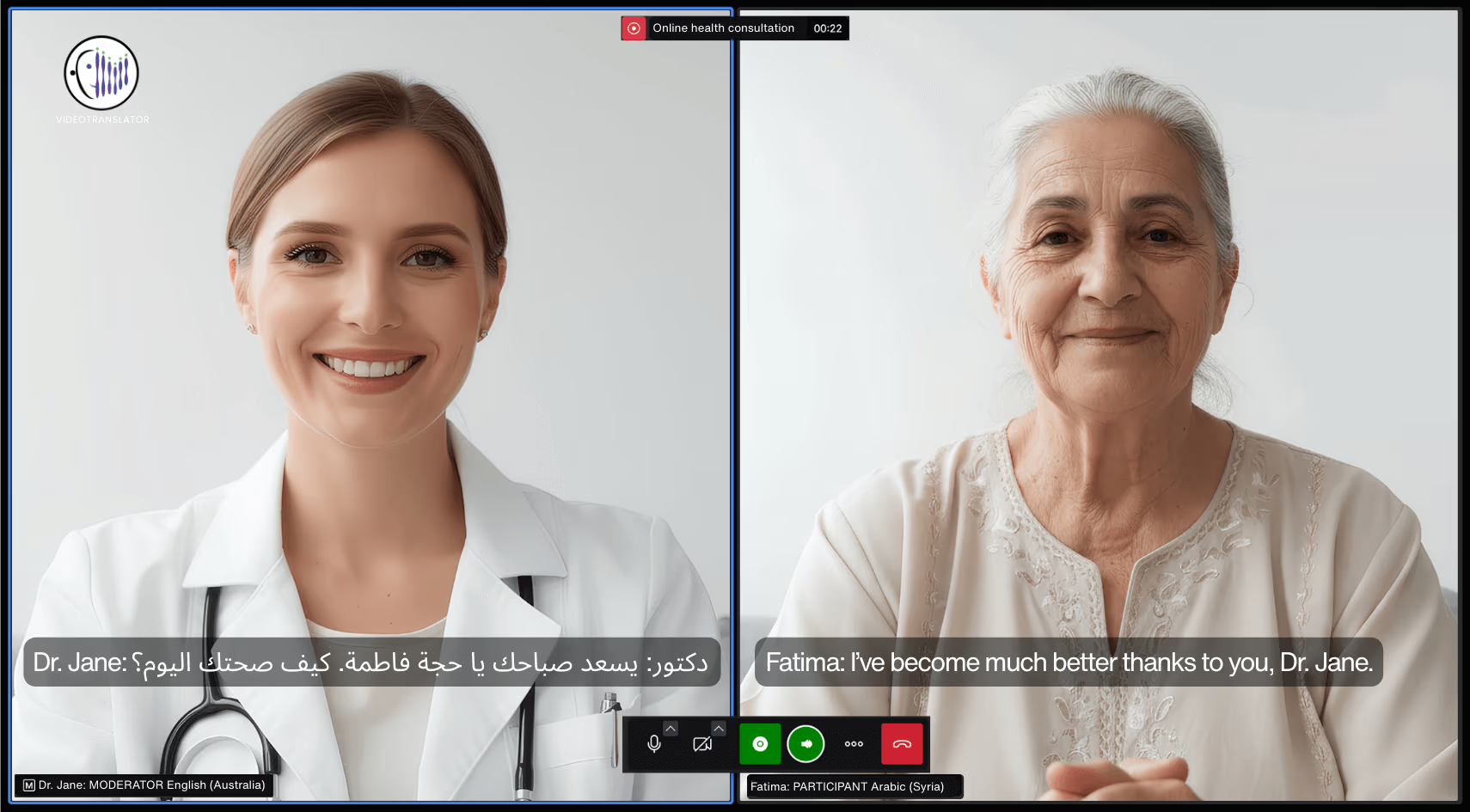
This was the version that clinical staff actually used in practice. The feedback it generated shaped everything that came next.
The Market-Ready Platform
Version 3 is MediCALD as it stands today: a production-grade, enterprise-ready health communication platform designed to be deployed across health organisations and embedded into existing clinical workflows.
The shift from Proof of Concept to market-ready product involved not just expanding features, but rethinking how the platform fits into a health organisation's broader technology and compliance environment. Every capability in Version 3 was designed with that context in mind.
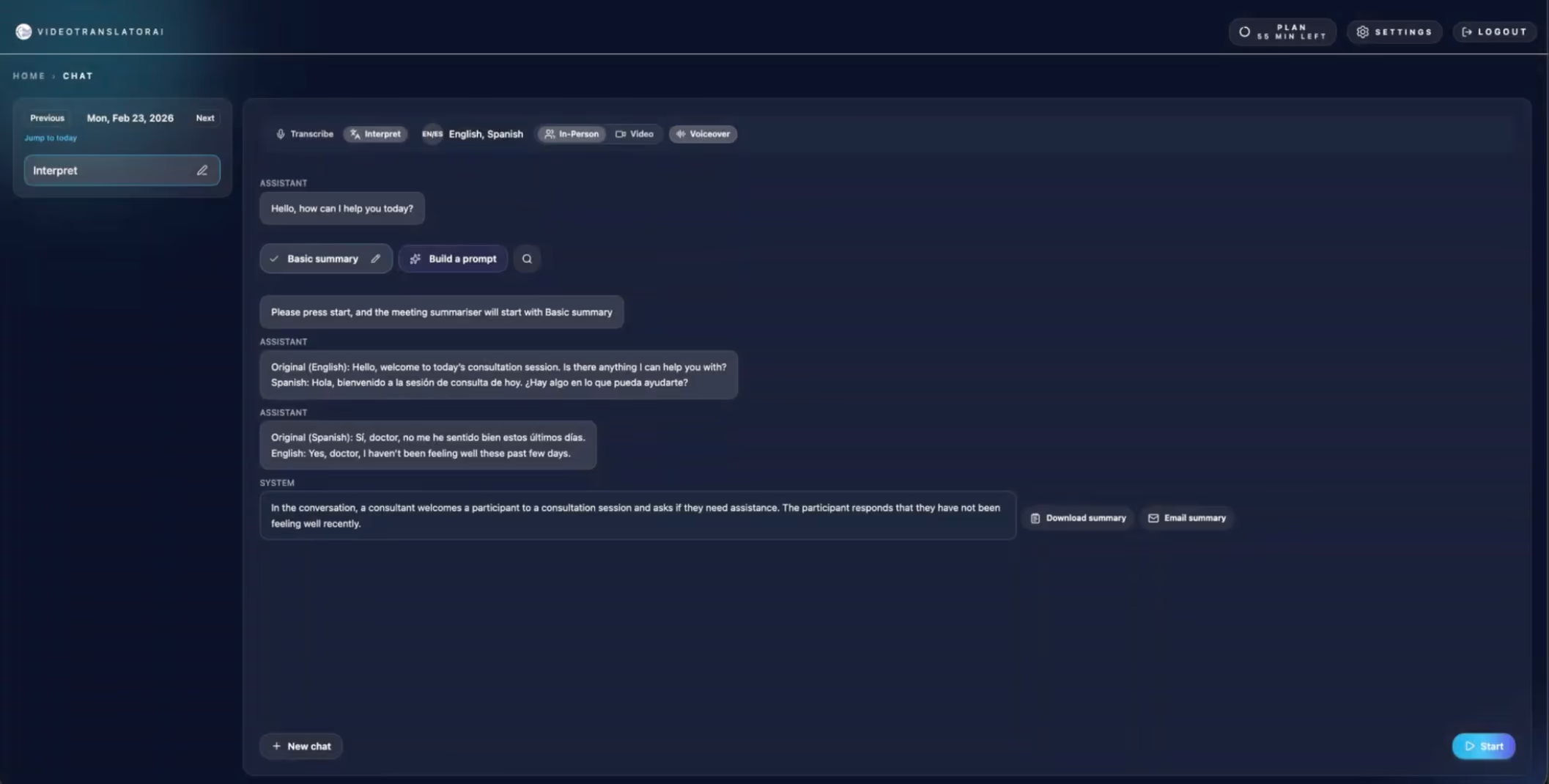
Session summaries and smart prompts automatically generate a structured record of each consultation at close. Clinicians receive a clear, organised summary without the administrative burden of manual documentation during or after the session.
Enhanced transcription and translation deliver improved accuracy, lower latency, and better contextual understanding across all supported languages, powered by OpenAI as the primary AI provider. The platform now also supports English-only transcription as a standalone capability, making it useful to any organisation that needs reliable transcription independent of translation.
A significantly simplified user experience reduces the entire session setup to selecting a mode and language pair. The session begins automatically. What previously required several configuration steps now takes seconds.
Native iOS and Android mobile applications mean MediCALD can be deployed on any device in the care pathway, from a desktop workstation at a clinic to a tablet carried into a patient's home.
Self-hosted deployment allows health organisations to run MediCALD within their own server infrastructure. For organisations with data sovereignty obligations and cybersecurity requirements, this is often a prerequisite for adoption rather than a preference.
Single Sign-On integration enables clinical staff to access MediCALD using their existing organisational credentials, removing the friction of separate logins and simplifying rollout at scale.
Multilingual appointment reminders are automatically sent to patients in their preferred language ahead of scheduled consultations. This addresses one of the consistently reported challenges in CALD health service delivery: non-attendance driven by miscommunication or uncertainty about appointment details.
What Comes Next
The NSW SBIR program provided the structure, the funding, and the partnership that made MediCALD possible. What it produced is a platform that is ready to go beyond the pilot context and operate at the scale the clinical need demands.
SWSLHD's challenge named a problem that exists across every health district in Australia. Linguistically diverse communities face real inequities in health access and outcomes when language is a barrier. MediCALD was built to reduce that barrier practically and sustainably within the constraints of real clinical settings and organisational requirements.
We are proud of what the program produced, and grateful for the partners who made it worth building properly.
For organisations interested in MediCALD, please reach out at elephantstripes.ai/contact.