
You Trained Delivery Robots While Playing Pokémon Go. Unknowingly.
30 billion images. 500 million players. One clever trick.

It’s the summer of 2016.
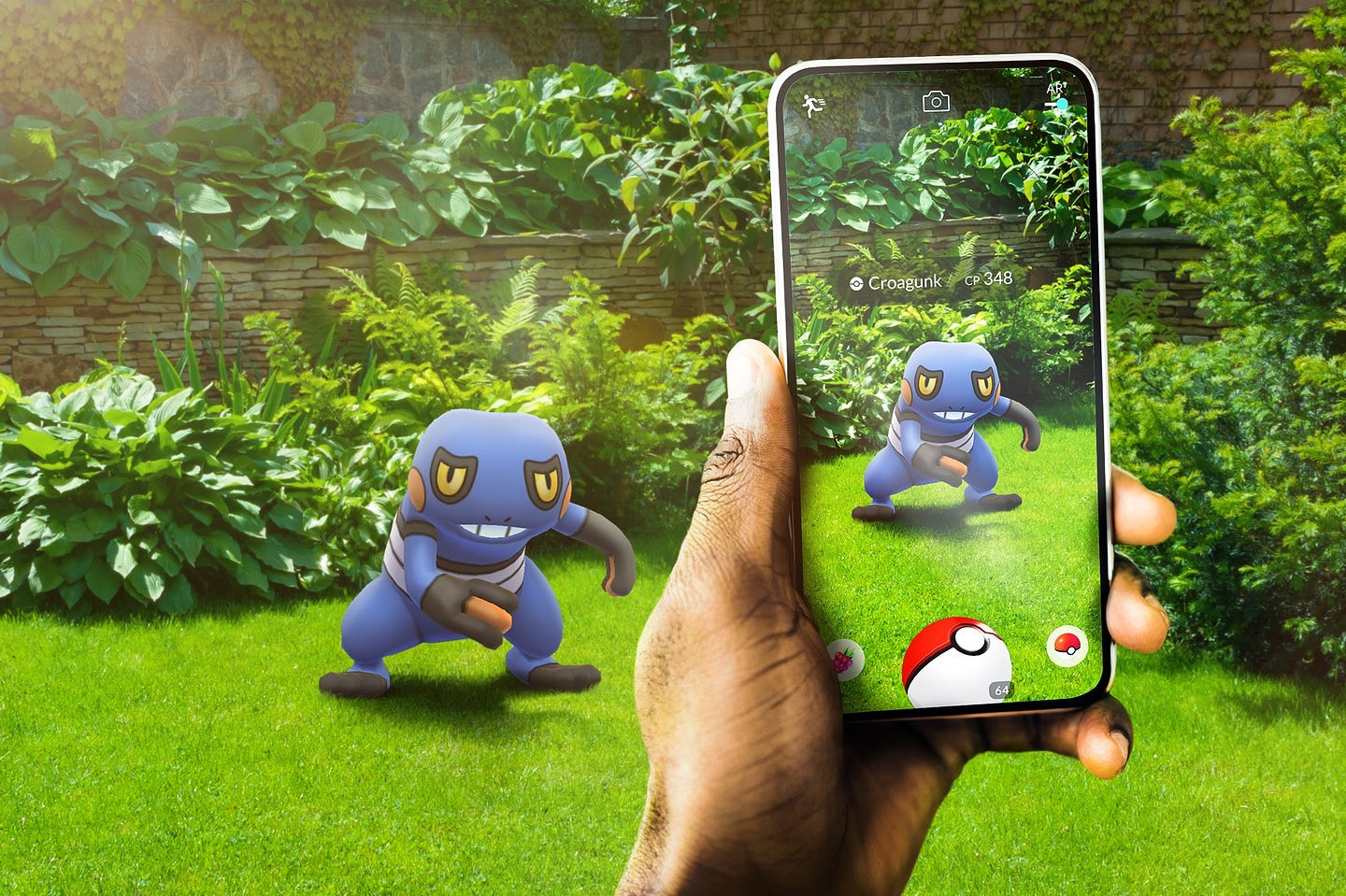
You’re in a park at 11 pm, phone raised at a slightly embarrassing angle, pointing your camera at a war memorial you have walked past a thousand times without a second glance.
You are not sightseeing. You are catching a Snorlax.
Or maybe it was 2021 and you were scanning a fountain for Field Research rewards because someone promised there was a Shiny Magikarp nearby.
You were not thinking about delivery robots. You were thinking about Pokémon.
Turns out, you were doing both.
How a Game Became the World’s Best Mapping Project
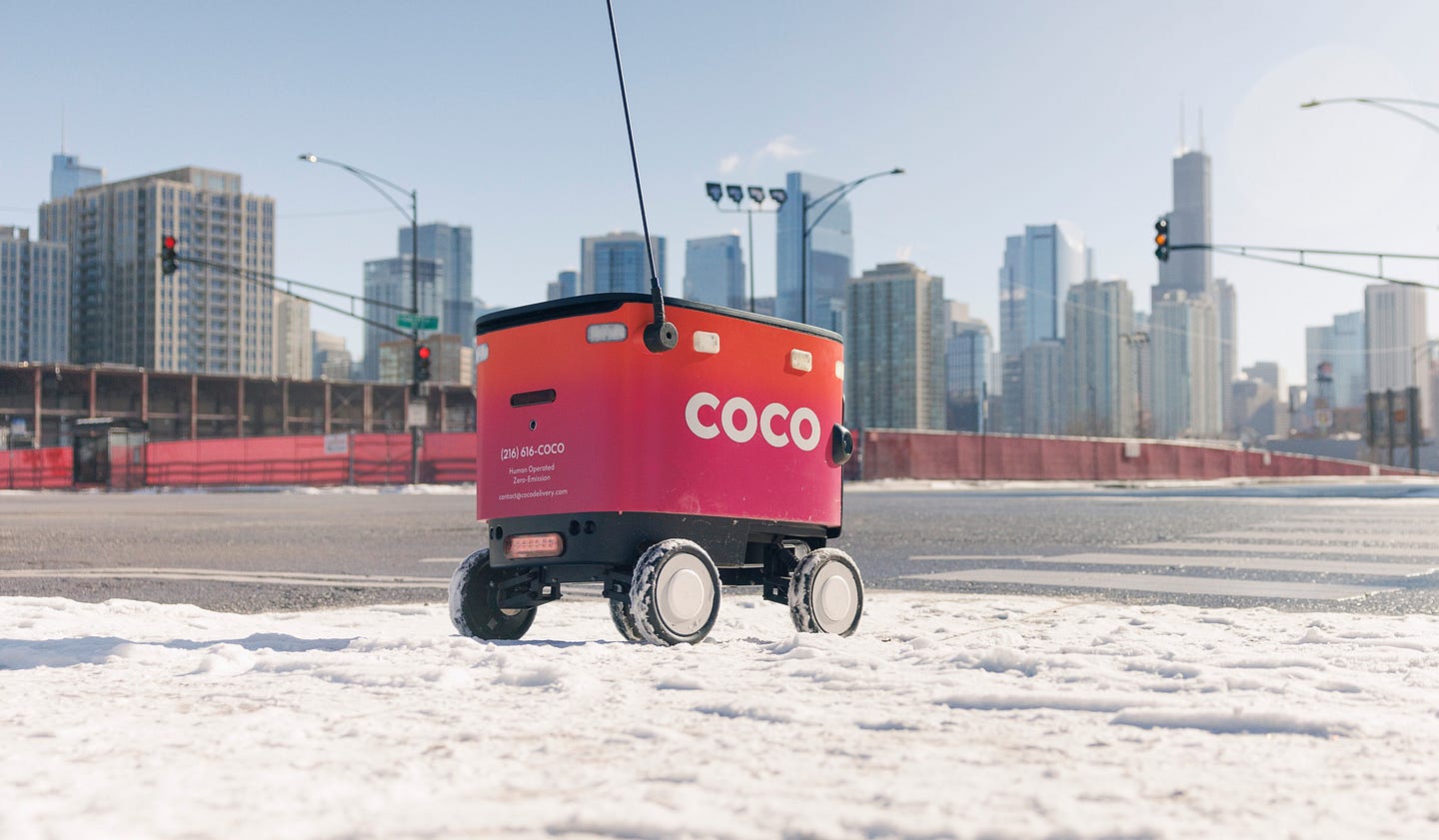
On 10 March 2026, a company called Niantic Spatial announced a partnership with Coco Robotics. It’s a startup that operates small suitcase-sized delivery robots across Los Angeles, Chicago, Miami, Jersey City, and Helsinki.
Coco robots trundle along footpaths at about 8 kilometres per hour, delivering food and groceries. They have completed over 500,000 deliveries.
And they are now navigating the world using a map built almost entirely from Pokémon Go data.
John Hanke, CEO of Niantic Spatial, put it plainly: “It turns out that getting Pikachu to realistically run around and getting Coco’s robot to safely and accurately move through the world is actually the same problem.”
That sentence deserves a moment.

The same underlying technology that made a virtual cartoon creature appear to stand on your actual footpath is now the reason a robot can find your front door within a few centimetres of accuracy. The same scans of statues and street corners that unlocked your in-game rewards have been stitched into one of the most detailed ground-level maps of the physical world ever assembled.
Over a decade, Pokémon Go players voluntarily submitted photos and short videos of public landmarks, street corners, storefronts, and urban intersections, creating a dataset that now stands at 30 billion images captured at ground level, across nearly every major city on the planet.
30 billion. That is not a typo.
Why GPS Alone Is Not Enough

If you have never thought about why a delivery robot might struggle to find your exact doorstep, here is the unglamorous reality of GPS in a city.
GPS, the backbone of most navigation systems, does not fare that well in dense urban environments, where tall buildings interfere with satellite signals. For a delivery robot that needs to drop food at a precise doorstep, being several feet off means unhappy customers.
Niantic Spatial’s solution bypasses satellites entirely. Their Visual Positioning System, or VPS, works differently: the robot’s onboard cameras capture what is around it, and the system matches those live images against its vast database to determine the robot’s exact location in real time.
Coco’s robots use four cameras mounted around the machine, constantly comparing what they are seeing against the archive of images that millions of players contributed over eight years.
“We know where you’re standing within several centimetres of accuracy and, most importantly, where you’re looking,” says Brian McClendon, CTO at Niantic Spatial.
The Pokémon Go data is particularly valuable because of how it was collected. For each of its million-plus mapped locations, Niantic Spatial has thousands of images taken in more or less the same place but from different angles, at different times of day, and in different weather conditions. Each image comes with detailed metadata that pinpoints where the phone was in space at the time of capture, including which way it was facing, which way up it was, and whether it was moving.
No traditional mapping company could have assembled that on the same timeline or budget. Google Maps gives you a street-level photo from a camera car that drove past once. Pokémon Go gave Niantic the same spot photographed from hundreds of angles, across every season, in rain and sunshine, by people standing at different heights, on different days.
That richness is what makes the dataset genuinely irreplaceable.
The Bigger Picture: Gaming as the World’s Biggest Data Farm
The Coco partnership is just the opening act. What Niantic Spatial is actually building is considerably more ambitious.
Hanke calls it a “living map”.
What he refers to is a hyper-detailed virtual simulation of the world that changes as the world changes. As robots from Coco and other firms move about, they will provide new sources of map data, feeding into more and more detailed digital replicas of the world.
Think about what that means. The Pokémon Go players built the foundation. Now the robots themselves become the next generation of data collectors, continuously updating the map as streets change, buildings are renovated, new signage goes up, construction begins. The map learns in real time, from every delivery.
Hanke and his team see maps as shifting in their fundamental purpose. Maps have long been used to help people locate themselves in the world. But maps for machines may need to become more like guidebooks, full of information that humans take for granted, with every object tagged with a list of its properties.
The vision extends well beyond delivery bots. Niantic Spatial has flagged AR glasses as a future application: if you are wearing augmented reality glasses and want digital information to lock precisely onto the physical world in front of you, you need exactly the kind of centimetre-accurate positioning that the VPS provides. The same technology could serve autonomous vehicles, construction robots, accessibility tools, and applications that have not been invented yet.
Niantic Spatial describes itself as “the most ambitious mapping operation ever assembled, one that was funded entirely by its own users’ enthusiasm for catching digital creatures.”
That is quite a sentence to put in a press release. But it is also, technically, accurate.
Did Anyone Actually Consent to This?
This is where it gets spicy, and fair enough.
The opt-in was explicit, technically. Players who submitted scans agreed to Niantic’s terms of service, which allowed the company to use that data. Nobody forced anyone to scan a single landmark. In that narrow legal sense, consent existed.
But informed consent i_s a different question. When you pointed your phone at a bus stop to earn some in-game currency, were you thinking: “I’m contributing to a commercial AI dataset that will eventually power Sam Altman-backed delivery robots_”?
Almost certainly not. You were thinking about the Shiny Charizard.
The reaction online has split roughly down the middle. Half the internet is genuinely impressed. The technical feat of turning a mobile game into the world’s most detailed ground-level map is, objectively, kind of brilliant.
Reddit’s r/technology summed up the pragmatic view: Niantic had no trouble selling its gaming division (Pokémon Go now belongs to Scopely, which has links to Saudi-backed investors), but held tightly onto the spatial AI division. Because the data was always the product.
The other half? Less charitable. “Nothing is sacred,” ran one headline. Players in communities across Reddit and X described feeling like unpaid data labourers. The phrase doing the rounds: “I was a data cow.” Some noted the added strangeness that the Saudi-linked acquisition of Pokémon Go means the game itself is now separated from the company that profited most from its players’ contributions.

To be fair: this is meaningfully different from the opaque, invisible data harvesting that social media platforms have normalised. Players actively participated. The scans were deliberate. Nobody was scraping your private messages or tracking you without any indication.
But the gap between “I consented to collect AR data for gameplay purposes” and “I helped build a commercial robotics business” is wide enough to make the discomfort legitimate.
The straightforward fix, going forward: games and apps that collect spatial data for downstream commercial use should say so plainly. Not buried in Terms of Service. Not implied by a broad privacy policy. A clear line: “Your scans may be used to train AI systems, including commercial products.”
That’s it. Not complicated. Just honest.
Gotcha, Capitalism!
Here is what is genuinely remarkable about this story, underneath the ethical complexity.
Five hundred million people installed Pokémon Go in its first 60 days. For years, those players wandered through parks, high streets, shopping centres, and suburban footpaths, pointing their phones at the physical world in exchange for virtual creatures. They built, entirely through the momentum of play and without any grand coordinating plan, the largest crowdsourced ground-level map in human history.
That map now lets a small robot find your front door within a few centimetres, in the rain, at night, in a city full of tall buildings bouncing satellite signals in every direction.
As Hanke put it: “If robots are ever going to assimilate into the environment in a way that’s not disruptive for human beings, they’re going to have to have a similar level of spatial understanding.”
The next time a Coco robot zips past you on the footpath carrying someone’s sushi, it is navigating using a map that millions of people built while chasing Pikachu. Give it a wave. The trainers earned it.
Gotcha, capitalism.
So here is the question worth putting to you directly: if you had known, back in 2016 or 2021, that your scans were building a commercial robot navigation system, would you still have played? Would you have scanned differently? Or would it have mattered at all?
Drop your answer in the comments. Genuinely curious where people land on this one.